Money Blocks in Tarot: The Beliefs Behind Your Balance
Money isn't just numbers in a bank account; it's deeply tied to our beliefs, experiences, and even our earliest lessons about value and worth. Sometimes, despite our best efforts, we find ourselves stuck in familiar financial patterns, feeling like we're hitting an invisible wall. Tarot offers a powerful mirror, not to predict your future, but to reflect on the subconscious beliefs that might be creating these 'money blocks.' By understanding these ingrained patterns, we can begin to gently untangle them. This article explores how specific tarot cards illuminate common financial hang-ups and offers pathways to a more expansive relationship with abundance.
Four of Pentacles: the clutch
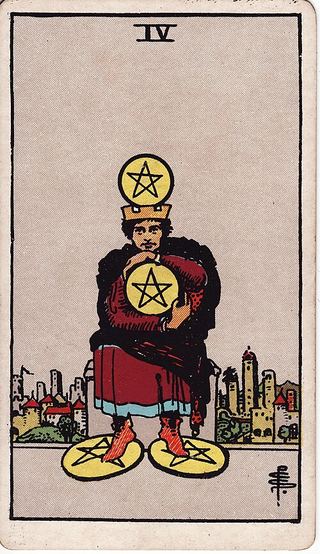
The Four of Pentacles often depicts a figure clinging tightly to their coins, one on their head, two under their feet, and one clutched to their chest. This isn't necessarily about greed, but about fear of loss. It speaks to a belief that resources are finite, and once you have something, you must guard it fiercely. This card can show up when you're holding onto money out of anxiety, perhaps sacrificing joy or growth opportunities because you’re unwilling to let go of what you have. You might find yourself saying 'no' to experiences or investments that could enrich your life, all because the thought of parting with money feels too risky. It's about security, yes, but taken to an extreme where it stifles flow and prevents new abundance from entering.
Five of Pentacles: the scarcity story
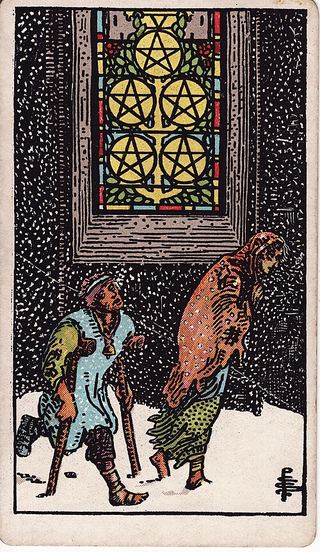
While the Four holds on, the Five of Pentacles speaks to the experience of perceived lack and exclusion. It shows two figures struggling past a brightly lit church window, seemingly oblivious to the sanctuary it offers. This card often reflects a scarcity mindset – the belief that there isn't enough, or that you are inherently unworthy of what others have. You might feel left out, struggling while others seem to thrive, or believe that you're destined for financial hardship. This isn't always about actual poverty; it's about the internal story you tell yourself. It's the feeling of being on the outside looking in, convinced that opportunities and support are not for you, even when they might be available if you only shifted your perspective.
The Devil: debt and the deals with strings
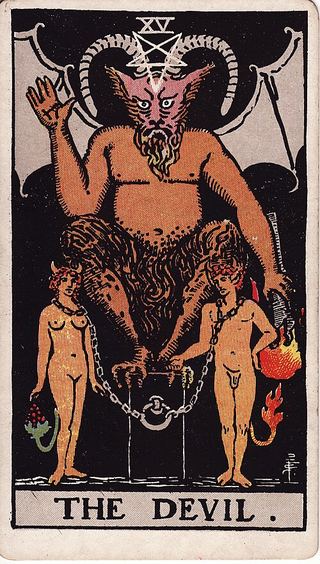
The Devil card, in a financial context, can represent being bound by unhealthy attachments or perceived obligations. This might manifest as crippling debt, where you feel trapped and controlled by financial burdens. It also speaks to making 'deals with the devil' – compromising your values, taking on work you hate, or entering financial arrangements that chip away at your freedom, all for the sake of money. The chains in The Devil card are often loose enough to be removed, but the figures remain bound, illustrating how our own beliefs and choices keep us stuck. It's about feeling powerless in the face of financial pressures, or falling prey to materialistic desires that lead us further into a cycle of dependency.
Rewriting the pattern with the Ace
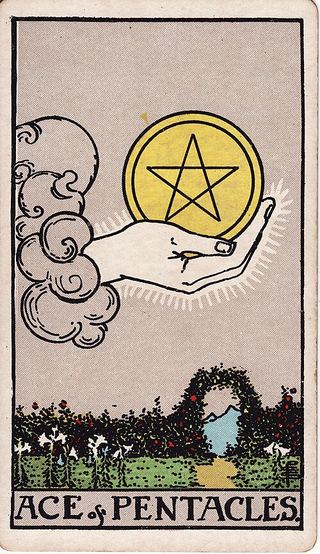
To shift these patterns, we look to the Aces. The Ace of Pentacles, in particular, offers a fresh start, a new seed of opportunity. It represents a gift from the universe, a tangible beginning. When you recognize a money block, the Ace invites you to consciously choose a new path. This isn't about magically erasing past struggles, but about cultivating a new mindset. It's about taking that first step, however small, towards a healthier financial reality. This could mean establishing a new budget, exploring a new income stream, or simply shifting your internal dialogue from 'I can't' to 'What if I could?' The Ace is an invitation to plant a new intention and nurture it with awareness and consistent action.
Cards in this article
Frequently asked
What does the Four of Pentacles mean for money?
The Four of Pentacles suggests a fear of loss leading to clinging tightly to money. It can indicate a need for security that prevents flow, investment, or generosity, often stemming from anxiety about not having enough.
How does the Five of Pentacles relate to financial struggles?
The Five of Pentacles reflects a scarcity mindset, feeling left out, or believing you are unworthy of abundance. It highlights the internal story of lack that can make you overlook available help or opportunities.
What tarot card represents debt or financial entrapment?
The Devil card often represents debt or financial entrapment, symbolizing being bound by material desires, unhealthy financial obligations, or perceived powerlessness. It points to self-imposed limitations that prevent financial freedom.
Free · three cards · no signup