Reversed Tarot Cards: What They Mean and How to Read Them
When you draw a tarot card that's upside down, it can feel like a jolt. Is it a bad omen? Does it cancel out the card's meaning? The truth about reversed tarot cards is far more nuanced and, frankly, more useful for self-understanding. Rather than a direct opposite or a sign of impending doom, a reversal invites you to look closer at an aspect of your situation that might be hidden, resisted, or simply operating differently than its upright counterpart. Understanding reversals adds another layer of depth to your readings, helping you uncover subtle dynamics and personal growth opportunities. Let's explore what these inverted images are really telling you.
What a reversal is not
First, let's clear up some common misconceptions. A reversed card is not inherently negative or a "bad card." It doesn't mean the upright meaning is completely nullified or that the universe is sending you a warning to avoid something at all costs. Tarot is a tool for reflection, not fortune-telling. Therefore, a reversal isn't a prediction of misfortune. It's also not a sign that you've done something wrong or that your intuition is off. Instead, think of it as a spotlight shining on a different facet of the card's energy. It's an invitation to pause and consider the card's message from another angle, often one that suggests internal work or a shift in how its energy is manifesting in your life.
Blocked, internalized, or waning energy
So, if it's not a bad omen, what is a reversal? In the Rider-Waite-Smith tradition, reversals often point to energy that is blocked, internalized, or waning. 'Blocked' means the energy of the card is present but unable to flow freely, perhaps due to external circumstances or internal resistance. 'Internalized' suggests the energy is being experienced within you, perhaps as a private process or something you're grappling with personally, rather than manifesting outwardly. 'Waning' implies the energy is either diminishing, losing its power, or hasn't fully developed yet. It's about an impedance or an inward turn of the card's core message. Consider these possibilities when you encounter an inverted card in your spread.
Reversal examples across the deck
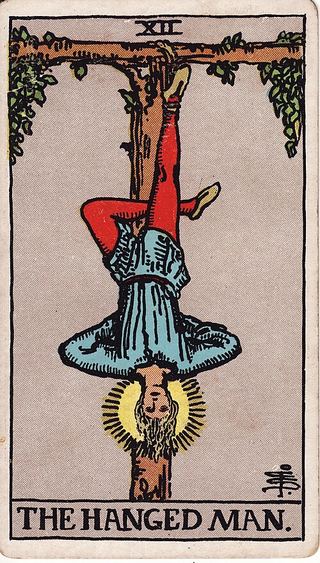
Let's look at some examples. The upright Strength card speaks of inner fortitude, courage, and gentle persuasion. Reversed, it might suggest a struggle with self-doubt, a lack of courage, or an internal battle to tame one's impulses. For the upright Two of Pentacles, which represents balancing multiple priorities with adaptability, reversed could indicate feeling overwhelmed, unable to juggle responsibilities, or a resistance to change. The upright Hanged Man signifies surrender, new perspectives gained through pausing, and sacrifice. Reversed, it could point to an unwillingness to let go, feeling stuck without a clear path forward, or resisting necessary changes. Each reversal guides you to look inward or at obstacles preventing the full expression of the upright meaning.
Do you have to read reversals at all?
The short answer is no, you don't have to read reversals. Many experienced readers choose to read all cards as upright, believing that the full spectrum of a card's meaning—positive, challenging, internal, external—is already contained within its upright interpretation. If reading reversals feels confusing, overwhelming, or simply doesn't resonate with you, it's perfectly acceptable to set them aside. Your tarot practice is personal. The most important thing is to establish a system that feels authentic and helpful for you. If you're just starting out, you might choose to focus on upright meanings first, then introduce reversals once you feel more comfortable with the core messages of each card. Trust your intuition and what serves your reflective process best.
Cards in this article
Frequently asked
Are reversed tarot cards always bad?
No, reversed tarot cards are not inherently bad. They typically signify blocked, internalized, or waning energy related to the card's upright meaning, inviting deeper reflection rather than predicting misfortune.
Can I choose not to read reversed tarot cards?
Yes, you absolutely can. Many experienced tarot readers choose to interpret all cards as upright, believing the full spectrum of meaning is covered this way. Your practice should align with what feels most intuitive and helpful to you.
What's the main difference between an upright and reversed card?
An upright card typically represents the direct and flowing manifestation of its energy, while a reversed card often suggests that the energy is blocked, internalized, or operating in a more challenging or diminished way.
Free · three cards · no signup