Tarot as a Self-Discovery Tool (No Crystal Ball Required)
Tarot often carries a mystical reputation, conjuring images of crystal balls and predicting the future. While its allure is undeniable, the true power of tarot lies not in foretelling what will happen, but in revealing what is already within you. It's a profound tool for self-discovery, a mirror that helps you see your own thoughts, feelings, and patterns more clearly. This isn't about magic or external forces; it's about connecting with your inner wisdom. When you approach tarot with an intention for self-reflection, you'll find it offers a grounded, accessible path to understanding yourself better, one card at a time.
Projection: why the cards feel so accurate
Have you ever drawn a card and felt an immediate, uncanny resonance? This isn't because the card holds some inherent truth about your future, but because you are projecting your own experiences and interpretations onto it. When you look at an image like the Ten of Swords, depicting a figure lying prone with ten swords in their back, you might instantly connect it to a recent feeling of betrayal or a sense of rock bottom. The card itself is a neutral symbol; it's your mind that supplies the meaning, drawing from your personal history and current emotional landscape. This act of projection is precisely what makes tarot so effective for self-reflection. It provides a visual prompt that allows your subconscious to surface, making internal states tangible and easier to examine. The accuracy you feel is your own insight reflected back to you.
The archetypes you already live
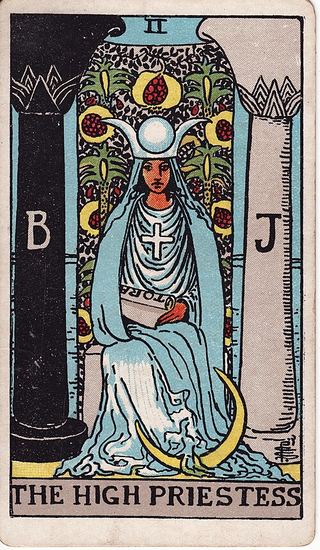
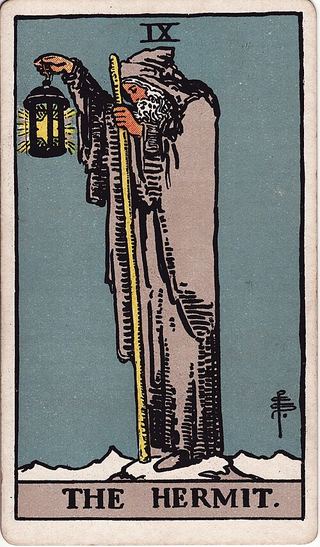
The Rider-Waite-Smith tarot deck is rich with archetypal figures and scenes that represent universal human experiences. The Fool embodies new beginnings and trust; the Empress speaks to nurturing and abundance; the Hermit signifies introspection and solitude. These aren't just characters on cards; they are energies and roles that manifest in your own life. Perhaps you often find yourself in the role of the diligent student (Page of Pentacles), or the wise advisor (King of Swords). By recognizing these archetypes as they appear in your readings, you gain insight into your current behaviors, motivations, and challenges. The cards help you identify which archetypal energies are active within you right now, offering a framework to understand your patterns and make conscious choices about how you embody these roles.
Questions for self-work
To shift tarot from fortune-telling to self-discovery, frame your questions thoughtfully. Instead of asking 'Will I get the job?', try 'What aspects of myself can I cultivate to improve my career prospects?' or 'What fears are holding me back from pursuing my professional goals?' Focus on 'what,' 'how,' and 'why' questions that encourage introspection rather than yes/no answers or predictions. For relationships, instead of 'Will we get back together?', ask 'What lessons can I learn from this past relationship?' or 'How can I better nurture my current connections?' These types of questions empower you to explore your inner landscape, understand your motivations, and identify areas for personal growth. The cards then become prompts for deeper self-inquiry, guiding you toward your own answers.
A weekly self-reading practice
Establish a consistent weekly practice to integrate tarot into your self-discovery journey. Choose a quiet time, perhaps Sunday evening, to reflect on the week ahead or the week that just passed. A simple three-card spread is perfect for this: 'What do I need to be aware of this week?', 'What challenge might arise?', and 'What strength can I draw upon?' Alternatively, a 'Past, Present, Future' spread can be re-framed as 'What have I learned?', 'What am I experiencing now?', and 'What can I focus on moving forward?' Journal your reflections for each card. Don't worry about being 'right' or memorizing meanings; allow the imagery to speak to you. Over time, you'll develop a personal connection to the cards and gain valuable insights into your evolving self.
Cards in this article
Frequently asked
Can tarot cards predict my future?
No, tarot cards do not predict the future in a deterministic way. They reflect your current energies, potential paths, and internal landscape, offering insights that can help you make informed choices about your future.
Do I need to be psychic to read tarot?
You do not need to be psychic to read tarot. The practice relies on intuition, self-reflection, and an understanding of the card meanings, all of which are accessible to anyone willing to engage with the deck thoughtfully.
What if I get a 'bad' card like The Tower?
There are no 'bad' cards in tarot, only challenging ones that represent difficult but often necessary experiences. The Tower, for instance, typically signifies sudden change or revelation, which, while disruptive, can lead to powerful transformation and new beginnings.
Free · three cards · no signup